The Restoration Contractor’s Role in a Dynamic Team
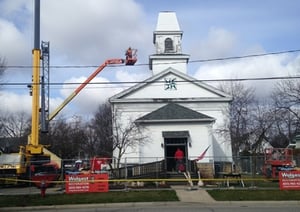 A Property Restoration Contractor is in a unique position with diverse clients and multiple customers on each of their projects. It’s the restoration contractor’s responsibility to find the best solutions that both the policy holder and the insurance adjuster can agree upon.
Wolgast Restoration, a systemized company, feels they have found a solid program to be a solution provider to this dynamic team. Their systems have been developed to include the steps for best case outcomes and case studies they’ve accumulated through their own past experiences. The system dictates the steps they take on each unique project, which helps the process run smoothly, communication, stay open, and expectations be met.
Should expectations not be met, it can sour the relationship for most or all parties. And there are expectations throughout, starting with the initial meeting of the policy holder, which is typically a highly upsetting time for the policy holder as they’ve just experienced a loss and are facing many unknowns. As part of Wolgast’s process, staff members are trained on how to handle sensitive situations. When there is a large project to tackle, sometimes it’s easy to jump into action without realizing that the policy holder’s world seems to be in shambles. Having Wolgast’s team members address the direness of the client's situation helps to start the project with trust that they’ll be taken care of.
Other expectations to be met are the scope of work, what will be covered, and what the restored property will look like when it’s finished. Wolgast addresses this by using Xactimate software and following IICRC guidelines. A Restoration Contractor can easily set expectations for the cost of the restoration by using Xactimate estimating software as it’s the same software/pricing that the adjuster uses for their estimate. This takes out the guessing game early in the process. The contractor and adjuster only have to agree on the scope of work at this point, and the methods of restoration are dictated by the standards of IICRC, also well known throughout the industry.
Furthermore, in the unfortunate case of a total loss, say due to a fire, Wolgast Restoration is part of a team of licensed Michigan Builders that have been in business for 70 years, which includes a licensed architect on staff. This is an advantage that Wolgast Restoration brings to the table. A team of this caliber with the knowledge of the insurance industry standards, language, pricing, and policies; plus a skilled construction workforce and architect will complete your restoration quickly, efficiently, and with expected outcomes.
Lastly, Wolgast has established good ratings with all Third Party Administrators with which they work. The TPAs appreciate our professional and systemized approach to insurance restoration. Wolgast works hard to maintain their scores with these TPAs and will do the same for insurance adjusters, agents and their customers, so all parties can maintain their respective clients.

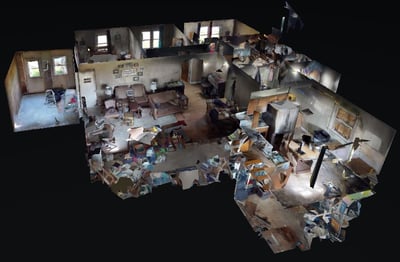 Wolgast Restoration has added technology to make their service even more efficient. The Matterport 3D Camera is a high resolution scanning device that lets us take 3D photos to turn into a high quality, precise, 360 degree, walk-through, interactive image online. The qualities and capabilities of the scan have many benefits that are useful to Insurance Companies, including quicker estimating and more efficient management of restoration activities. By scanning a building interior with the camera on an initial site visit, we can use the software’s capabilities to do follow-up measurements or verification if needed, get additional/outside input via email without subsequent site visits, and keep high-quality documentation of the state of the property.



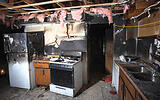
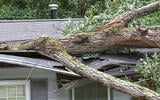
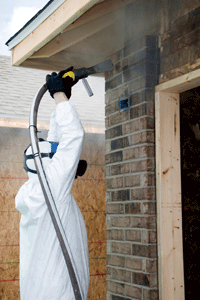 For insurance carriers and building owners alike, risk management should be a coveted aspect of their relationship with an insurance restoration company. There are several means that successful restoration companies contribute to risk management on a project and those are a combination of experience, great customer service, resources, wide coverage area and training/certifications.
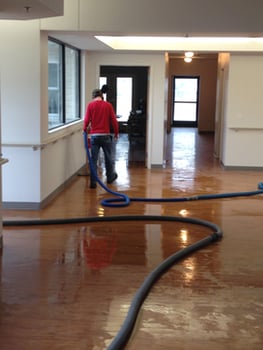 Love them or dislike them, our insurance restoration business model has been molded by Third Party Administrators (TPAs) from the onset of our business plan. This was intentional to simplify our new restoration service division in a complex industry to satisfy all end users, i.e. insurance companies, and policy holders.
 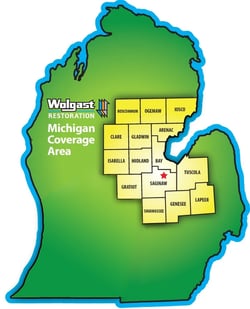 We know the importance of moving quickly to reach the optimal number of policy holders and following through with quality service to keep them happy. As a systemized company, we use a carefully constructed and laid out CAT protocol/process and are prepared to reach a wide variety of property owners in a short amount of time, plus we have the capacity and resources to effectively handle their restoration needs by drawing from our general construction division and its staff when necessary. This system guides us to know the manpower that we will need, the responsibilities of each staff member and the communication necessary to remain responsible, accountable and organized. Also, with two locations in Michigan, one near the center of the state in Freeland and one in the southwest in Kalamazoo, we’re ready to cover a large portion of Michigan to readily help you serve your clients.
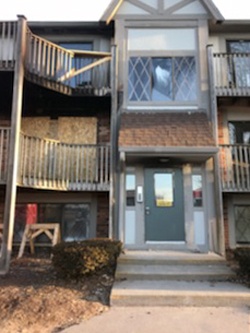 Planning for a disaster is the best way to get through the mayhem faster. However, how does a property owner or manager fully prepare their building for all types of disasters? It can feel like a never ending and expensive task when you try to ward off a storm, flood, fire, vehicle impact, etc. without proper direction. And rather than attempting to avoid all disasters, we recommend that the solution is a Disaster Response Plan (DRP) organized by a professional restoration company. This plan will contain all the information needed to quickly react in an unforeseen incident involving damage to your properties. Each DRP partnership is customized to a client’s specific business needs and building structure.
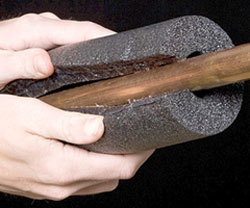 The fluctuating temps we’ve experienced this winter can wreak havoc on our health and our building pipes. Neither are fun to deal with, and many who haven’t experienced bursting pipes are often caught off guard when it happens. The freezing and expanding and contracting action causes pipes to break and/or crack then water floods your building or home creating mayhem. There are simple preventive measures you can take to protect yourself from a leak and we share them with you below.
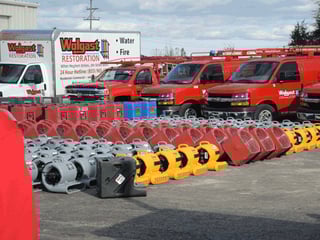 I have searched online to see what industry professionals recommend for restoration companies (RCs) to gain more referrals from insurance agents and adjusters and have learned some interesting and quite varied tips. All seemed to agree, though, that customer retention and relationships were the most important contributing factors to choosing an RC. We have to agree that retention and relationships are most important, too! We would add that trust, great workmanship, and promises met are the means to achieve both these qualities.