
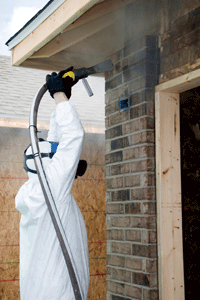
 For insurance carriers and building owners alike, risk management should be a coveted aspect of their relationship with an insurance restoration company. There are several means that successful restoration companies contribute to risk management on a project and those are a combination of experience, great customer service, resources, wide coverage area and training/certifications.
The more credentials a restoration company and its employees have, the higher the probability that they’ll do the job right the first time, and therefore minimize risk. By following IICRC protocol, damage gets stopped quicker, materials get cleaned to the level needed to stop further damage, and expectations are met.
Wolgast is an IICRC firm with employee-owner, staff members that have a variety of certifications pertaining to their area of expertise. We have obtained these top credentials to be recognized by Third Party Administrators (TPAs) as an expert in microbial, fire, smoke, and water remediation since insurance carriers rely on the TPAs to provide a qualified insurance restoration company to fulfill whatever is their present need. We actively train to be prepared for each project that a TPA deems is a fit for us so that we can minimize risk, and create a positive experience and rating within each system. That is very important because it’s expected of us and effects future opportunities, so we complete our continuing education and have sought out additional training opportunities for our staff.
We’re dedicated to being at the top of TPAs’ lists with a good track record, vast resources, wide market area, great customer service and the appropriate training. Therefore, our credentials include: Certified Subrogation Recovery Professionals, IICRC Certified, HAAG Certified and Residential Roof Inspector, Water Damage Restoration Technician, Applied Structural Drying Technician, Applied Microbial Remediation Technician, Fire & Smoke Restoration Technician, Contents Processing Technician, Commercial Drying Specialists, and many others that involve flooring, textiles, and trauma situations. Furthermore, we’re backed by a 70+ year, licensed and insured construction company to rebuild a structure if needed and be considered your complete restoration and risk management solution regardless of the size of the loss.
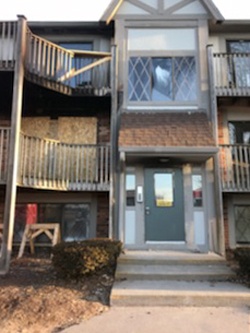 Planning for a disaster is the best way to get through the mayhem faster. However, how does a property owner or manager fully prepare their building for all types of disasters? It can feel like a never ending and expensive task when you try to ward off a storm, flood, fire, vehicle impact, etc. without proper direction. And rather than attempting to avoid all disasters, we recommend that the solution is a Disaster Response Plan (DRP) organized by a professional restoration company. This plan will contain all the information needed to quickly react in an unforeseen incident involving damage to your properties. Each DRP partnership is customized to a client’s specific business needs and building structure.
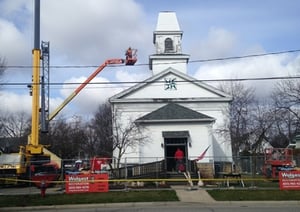 A Property Restoration Contractor is in a unique position with diverse clients and multiple customers on each of their projects. It’s the restoration contractor’s responsibility to find the best solutions that both the policy holder and the insurance adjuster can agree upon.
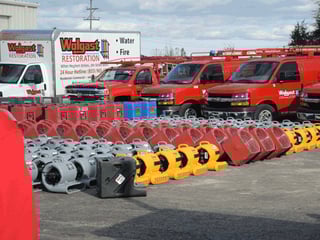 I have searched online to see what industry professionals recommend for restoration companies (RCs) to gain more referrals from insurance agents and adjusters and have learned some interesting and quite varied tips. All seemed to agree, though, that customer retention and relationships were the most important contributing factors to choosing an RC. We have to agree that retention and relationships are most important, too! We would add that trust, great workmanship, and promises met are the means to achieve both these qualities.
 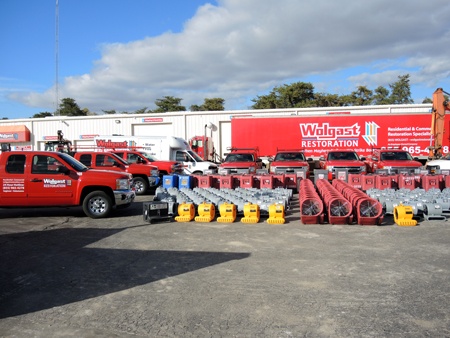 The insurance restoration industry is filled with franchised, nationwide companies. They have come with an established name and a network of connections. However, based on our experience as a general contractor reconstructing structures after they were damaged, we saw there were areas for time savings to get our clients in their buildings or homes faster. Being independent gives us more flexibility to tailor our service to each unique situation. Furthermore, being systemized, employee-owned, and having an experienced construction crew on our team, we provide many benefits to quickly mitigate, clean, and restore your property following a disaster, getting our mutual clients in their building faster and the restoration project closed earlier.
 In many property restoration situations, content restoring is one of the critical parts of the process. However, not every restoration company or general contractor offers it as a service. Most include mitigation, board-ups, and cleaning, or alternatively just reconstruction, which are also critical parts. For those companies that don’t offer the content processing service, they can outsource it to companies like Wolgast Restoration to remove the items, clean and deodorize them, and store them via an inventory system in a large, climate controlled, secure and dry location.
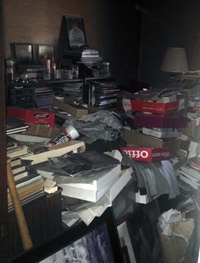 Oftentimes, the bulk of the heartache of a disaster isn’t the loss of the structure, but more so the loss of keepsakes and other valuable items. Using a content processing crew that is trained by IICRC can help to clean and deodorize a wide range of items that may otherwise be mistaken as ruined. We surprise our clients quite often with the rare items that we can restore to pre-disaster condition. For instance, one of our customers had an antler mount on a cream colored base that was stained with smoke and soot and thought to be a total loss, but through our IICRC training and equipment, we were able to restore the base and the antlers to their pre-disaster condition, much to the client’s surprise. Additionally, we were able to salvage a large part of a different customer’s massive baseball collection after a fire in his home. He not only had over 200,000 baseball cards, but also newspaper clippings, books and other valuable memorabilia. Needless-to-say, the customer was concerned about the inventory and keeping track of the items that were most valuable, regardless of salvaging or not. We were able to assess everything, salvage a large portion and satisfactorily establish his comfort with our system to keep his collection intact for his review.
 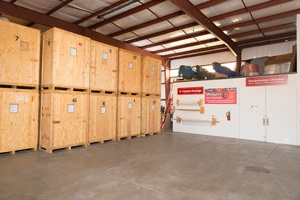 In addition to sanitizing, we keep inventory of all items in our care. We use a barcode tracking system to inventory and process contents, so at any time during our care, we know what items have been cleaned, what items still need to be cleaned, and where an item is in our warehouse (which vault). Additionally, we have adequate storage/vaults to take on a loss of any size and we carefully pack-up all items for storage then keep them secure until it’s time to return to their owner.
 Most often, home or business owners look to their insurance adjusters for direction in the event of a fire, flood, storm or vehicle impact emergency. They want to know who should they call
 Experiencing property loss due to a flood, fire or other disaster can be a very stressful and confusing event for the building owner. For that reason alone, it is very important that you choose a qualified restoration contractor who can answer any questions you have about the restoration process, to help alleviate your concerns. The project manager should listen closely to you and offer an open line of communication to guide you through the entire restoration process, without making you feel uncomfortable. This will ensure the project runs smoothly and gets completed on time, and to your satisfaction.